The Grounded Woman Blog
No.1 Emotional Healing & Marriage Recovery Blog for African Women
I Watched My Sister Lose Her Mind After Her Husband's Betrayal. This Is the 21‑Day heal from Root Protocol That Could Have Saved Her.
He cheated.
You found out. Maybe you saw the messages. Maybe someone told you. Maybe he confessed after you already knew. It does not matter how you found out. What matters is what happened to you after.
You stayed.
You stayed because of the children. You stayed because of your faith. You stayed because your mother said "every marriage has its trials." You stayed because leaving felt like admitting to the world that your marriage had failed — and you could not carry that shame on top of everything else.
So you stayed. And nobody warned you that staying without healing would feel like this.
You do not sleep properly anymore. Not really. You lie there at 2am with your mind running through the same images, the same questions, the same scenes — over and over and over. Who was she? How long did it go on? Did he say the same things to her that he says to me? Did he touch her the way he touches me?
You check his phone. You know you should stop. You have told yourself a hundred times to stop. But your hands reach for it before your brain can intervene. And every time you check, you feel worse — whether you find something or not. Because if you find something, the wound reopens. And if you find nothing, you do not feel relief. You feel suspicion. He must have deleted it.
You cry alone. In the bathroom. In the car. At night when he is already asleep. You have cried more in the last few months than you have cried in your entire adult life and nobody in your house — nobody in your family — nobody in your church — knows the half of it.
What is wrong with me?
Why can I not just forgive and move on like everyone says?
Am I going mad?
You smile at family gatherings. You answer "I am fine" so many times a day that the words no longer have meaning. You stand in front of the mirror and you do not recognise the woman looking back at you. She looks tired. Older. Hollow. Like someone removed something essential from behind her eyes and replaced it with a kind of exhaustion that sleep will never fix.
You have prayed. You have fasted. You have cried out to God at 3am on your bedroom floor begging for peace. And maybe God heard you — because right now, right here, on this page, you are about to find the answer you have been asking Him for.
If any of this sounds like your life right now — even a fraction of it — then you might want to pay full attention and listen to every word I am about to say.
Because I am about to share with you the neuroscience-based healing protocol I wish I had given my sister before it was too late.
This protocol was not born from a motivational book. It was not created by a relationship influencer with an Instagram following and a self-awarded certificate. It was not assembled from Pinterest quotes about forgiveness and moving on.
It was built from three things:
Formal training in psychiatry — the clinical understanding of what betrayal trauma actually does to the female nervous system at a neurological level, not the watered-down version you hear from people who mean well but do not know what they are talking about.
Deep research into betrayal trauma recovery — drawing on the published work of Shirley Glass, Janis Spring, and Dr. Omar Minwalla, three of the most important clinical voices in understanding what happens inside the mind and body of a woman whose partner has been unfaithful.
And the most painful lesson I have ever learned — watching my closest friend, the woman I called my sister, mentally and emotionally collapse after her husband's betrayal while I stood beside her with all my training and did not know how to stop it.
Hi. My name is Dr. Naomi Joseph.
The first thing you should know about me is that I am not here as a motivational speaker, a relationship influencer, or someone repeating empty advice from the internet. I am a medical doctor with formal training in psychiatry, and this work became deeply personal when I watched someone I loved break under the weight of betrayal in a way I now know could have been interrupted — if I had known then what I know now.
What I discovered — too late for her, but not too late for you — is that there is a dangerous gap between what clinical research knows about betrayal trauma and what women in real life actually receive as advice. That gap is where women fall apart. That gap is where marriages die even when both people are still in the house. That gap is where mothers lose themselves and children lose the version of their mother they will never get back.
I built this protocol to close that gap. Once and for all.
I need to tell you this story from the beginning. Not because it is easy to tell. But because if I do not, you might make the same mistake I did — and someone you love, or someone who is you, might end up where my sister ended up.
I call her my sister. She was not my blood sister. She was my closest friend. The kind of friend who becomes family. The kind of woman you look at and think — if anyone can survive anything, it is her.
She was strong. Not the loud kind of strong. The quiet kind. The kind that holds a home together while carrying burdens nobody else even knows about. Seven years into her marriage. Three beautiful children. A husband who appeared to the world as a good man.
Then she found out.
Her husband had not just been unfaithful. He had gotten the other woman pregnant.
And that was the day the woman I knew began to disappear.
She did not leave immediately. She did what most Nigerian women do. What most African women do. What our culture and our faith and our family structures quietly demand of us without ever saying it out loud.
She hid it.
She absorbed it. All of it. The shock. The humiliation. The rage. The grief. She swallowed it whole and smiled at her children over breakfast the next morning as if nothing had happened.
She showed up at church. She answered "I am fine, thank God" so many times it stopped meaning anything. She cooked. She cleaned. She performed the role of wife and mother with such precision that even the people who saw her every single day did not know she was dying inside.
I knew.
Not because she told me. She did not tell me for weeks. I knew because I am trained to see what people are hiding. And what I saw in her frightened me.
Her laugh changed. She still laughed — but her eyes did not follow. There was a delay, like her face was performing a function her body no longer believed in.
She held herself differently. Like someone protecting something broken inside her chest. Her arms crossed more. Her shoulders curved inward. She stood smaller than the woman I had known for years.
She stopped eating properly. She lost weight in the face first — the way you do when the body stops processing nutrition because the nervous system has redirected all resources to survival mode.
When she finally told me what had happened, she said six words that I hear in my head to this day.
"Naomi, I think I am going mad."
She was not going mad. Not yet. But she was exhibiting every clinical marker of unaddressed betrayal trauma, and I — standing right beside her with my psychiatric training and my medical degree — did not know how to stop it.
That sentence is the hardest one I have ever had to write.
I understood what was happening to her. I could name every symptom. The hypervigilance — the way her nervous system had locked itself into high alert, scanning for the next threat every second of every day. The intrusive thoughts — the images that kept replaying behind her eyes no matter what she did to stop them. The compulsive monitoring — checking his phone, checking his schedule, checking his location, checking and checking and checking because her brain had been reprogrammed to believe that danger was constant and she could never stop watching.
I could trace every one of those symptoms to its neurological origin. I could explain to you — right now — exactly what happens in the amygdala, the prefrontal cortex, and the stress response system of a woman whose partner has betrayed her. I could cite the research papers. I could draw you the diagram.
But I could not give my friend a structured, daily, culturally grounded, faith-anchored healing process that she could hold in her hands and work through privately, at her own pace, in her own language, without needing anyone else to know.
Because it did not exist.
I had the knowledge. I did not have the bridge. And my sister paid the price for that gap.
She tried everything. Let me tell you what she tried, because I know you have tried the same things.
She prayed and fasted. She spent hours on her knees. She cried out to God with everything she had. And I believe God heard her. But prayer without a structured healing process is like pouring water on a wound that needs surgery. It cleanses the surface. It does not reach the root. Her spirit was reaching for help but her nervous system was still in crisis — and no amount of fasting was going to rewire the trauma response that had taken over her brain.
Her church and family told her to forgive, stay quiet, and keep the marriage together. Her pastor said "God hates divorce." Her mother said "a wise woman builds her home." Her sister-in-law said "do not let another woman win." Every piece of advice she received was designed to protect the image of the marriage. Not one single piece of advice was designed to heal the woman inside it. She performed forgiveness because she was told to. Her body did not forgive. Her body kept score.
She pretended nothing had happened. She tried to act normal. She smiled. She showed up. She cooked his favourite meals. She thought if she performed normalcy long enough, the normalcy would become real. It did not. The pretending only pushed the pain deeper and made her feel more alone inside her own life. She became a woman living inside a performance of a marriage while the real her was suffocating behind the stage curtain.
She tried to punish him emotionally. Some people told her to ignore him. Act cold. Stop caring. Make him feel what he had done. She tried. But emotional punishment does not heal a wound — it weaponises it. The house became a cold war. Both of them sleeping in the same bed with a wall between them that grew thicker every day. She did not feel powerful. She felt exhausted.
She checked his phone constantly. Every notification. Every call. Every WhatsApp message. She checked and checked and checked because it felt like the only way to feel safe. But it was not safety. It was surveillance. And surveillance does not calm the nervous system — it keeps it in permanent crisis mode. Every time she checked and found nothing, she did not feel relief. She felt suspicious. He must have deleted it. Every time she checked and found something, the wound reopened. She was trapped in a cycle that had no exit.
People around her minimised what she was going through. "At least he came back home." "Thank God he did not give you a disease." "At least he did not leave you for her." "All men do these things." Every one of those sentences told her the same thing — your pain is not valid. Your pain is not big enough to warrant this reaction. Be grateful it was not worse. Those words did not comfort her. They made her doubt her own reality. They pushed her deeper into silence.
She stayed for the children without healing herself. She believed that staying was enough. That her physical presence in the home was the sacrifice her children needed. But staying alone does not heal. It keeps you in the same house with the same pain while the woman inside you slowly disappears — and your children do not get a healed mother. They get a hollow one. A mother who is there but not there. Present in body, absent in spirit. And children feel that absence even when they cannot name it.
Nothing worked. Not because she did not try hard enough. Not because her faith was not strong enough. Not because she was weak.
Nothing worked because she was treating a clinical wound with advice designed for a bad day.
Betrayal trauma is not sadness. It is not "being upset." It is a neurological injury. The research is clear. Dr. Omar Minwalla's clinical work documents that betrayal trauma produces the same stress responses in the brain as post-traumatic stress disorder. The same. Not similar. The same.
And my sister was fighting that injury with prayer alone, with family advice, with silence, with performance — because nobody around her, including me, had given her the right kind of help.
The day I knew we had run out of time was the day she called me and said someone in the market was watching her.
Not watching her the way people glance at strangers. Watching her specifically. Talking about her. Following her with their eyes. She said she could feel it. She said people at church were doing it too. Whispering about her. Looking at her differently.
I recognised what was happening immediately. The clinical term is paranoid ideation. It is one of the most serious presentations of prolonged, untreated trauma. It means the nervous system has been in crisis mode for so long that the brain has started misinterpreting neutral stimuli as threats. Strangers become enemies. Normal glances become evidence of exposure. The world itself begins to feel hostile.
This was not sadness. This was a psychiatric crisis. And it was happening to the strongest woman I had ever known.
She broke down physically alongside the psychological collapse. She could not eat. She could not function. The body that had been carrying this weight in silence for months — performing wife, performing mother, performing fine — finally refused to carry any more.
She left the marriage.
And she left two of her three children behind.
Not because she did not love them. God, she loved them. She left them because her mind — a mind that had been carrying too much, alone, for too long, without the right kind of help — could no longer hold everything together. Something had to give. And the thing that gave was the very thing she had been fighting to protect.
She looked better on the outside after she left. People around her said "she seems okay now."
She was not okay.
She rejected every marriage proposal that came after. Every one. She could not trust. She could not open. She could not let anyone close enough to reach the part of her that had been destroyed. The self-esteem that betrayal had stripped from her never fully returned — because the wound was never properly treated. It was only escaped.
The woman she used to be — the one I knew, the one who laughed with her whole face, the one who could hold a room together with nothing but her presence — that woman never fully came back.
And I carried the weight of that for years. The specific, personal, professional guilt of knowing — I had the training. I had the knowledge. I had been standing right beside this woman. And I still could not save her.
That guilt is the reason this protocol exists.
After I lost my sister — not to death, but to the version of her that betrayal stole — I went back to the research. Not as a student looking for a grade. As a woman who had watched someone she loved break and needed to make sure it never happened again to anyone she could reach.
I studied everything. Glass. Spring. Minwalla. The clinical research on betrayal trauma recovery. The neuroscience of trust violation and nervous system dysregulation. The documented timelines of healing — what shifts first, what takes longest, what interventions produce measurable results and in what timeframe.
But this time I read it with a different question.
Not "what is happening to these women?" I already knew that.
The question was: "What structured daily process would actually interrupt this — in the specific cultural and spiritual context of the African woman — in language she can use privately, without performing healing for anyone else?"
It took months. I built it exercise by exercise. Day by day. I wrote every prompt myself. Every reflection. Every reframe. Every script. I began with the single most powerful exercise in the entire protocol — The Letter You Never Sent — a private written release that gives everything you have swallowed since the day you found out a place to go that is not your chest, not your pillow, not your 2am ceiling.
I built daily exercises that work with the nervous system instead of against it. I wrote a forgiveness framework that does not guilt you into performing forgiveness for his comfort — but guides you toward the kind of release that actually sets you free. I created trigger response scripts — word-for-word instructions for exactly what to do the moment a trigger ambushes you so you can stop the spiral before it swallows your entire day.
I built the identity reclamation work — the exercises that help you rediscover who you are outside of wife, mother, and betrayed woman. Because betrayal does not just damage your trust. It damages your sense of self. And no healing protocol is complete if it does not rebuild the woman, not just manage the wound.
I made it 21 days. Not because 21 is a magic number. Because the research documents measurable nervous system changes within that window — improvements in sleep quality, reductions in intrusive thoughts, decreases in hypervigilant behaviour. Twenty-one days is the minimum effective dose for a woman who needs to feel a real difference in her body and her mind, not just read about healing as a concept.
I anchored every day in faith — not the performative faith that demands she forgive before she has processed, but the real, honest, raw faith that says "God, I do not understand this but I am choosing to walk through it with You."
And I grounded every exercise in the cultural reality of the African woman. The silence that is expected of her. The performance that is demanded of her. The family structure that makes asking for help feel like betrayal in itself. This protocol does not ask her to announce her healing to the world. It lets her do this work privately, at her own pace, in her own home, with nobody needing to know.
I will be honest with you about the doubt I carried.
I built this protocol from clinical research and personal devastation. I believed in it. But I also questioned it. Was it enough? Would it work for women at different stages of the wound — the woman who found out last week and the woman who found out three years ago? Would it translate across different cultural contexts — Lagos, London, Houston, Nairobi? Would a woman working through it alone, privately, without a therapist present, be safe doing this work?
The first real responses answered every one of those questions.
Within the first weeks of sharing this work, my inbox began filling with messages from women I had never met. Women who said they felt broken. Women who said the overthinking would not stop no matter what they tried. Women who said they wanted to forgive — genuinely wanted to — but something inside them could not get there no matter how many times they tried.
One woman could not wait to start reading. She messaged me before she had even finished the first section. She said she had never seen anything that described what was happening inside her so accurately — and just reading it made her feel less alone.
Another woman called it empowering — and that word stopped me in my tracks. Because that is not a word women use about their pain. That is a word women use when something has shifted inside them. When they feel, for the first time, like they have ground beneath their feet again.
These were not organised testimonials. They were raw, private, honest responses from women who recognised themselves in this work. And that recognition alone told me everything I needed to know.
The moment I knew this was doing what I had built it to do was not a dramatic moment. It was quiet.
It was a message that came in the middle of the night from a woman I had never met. She wrote:
"I just want the overthinking to stop. I am so tired of my own mind."
And I recognised her. Not personally. Clinically. She was describing exactly what the research predicts happens when betrayal trauma goes unaddressed. The rumination. The cognitive loops. The exhaustion of a brain that has been running threat assessments 24 hours a day with no structured process for standing down.
She was not broken. She was injured. And she had found her way to something that was built specifically for that injury.
That was enough.
When a woman begins to heal from betrayal trauma — really heal, not perform healing — the people around her notice before she can fully explain it herself.
You will notice it before anyone else does. The night you sleep through without the thoughts waking you at 2am. The morning you reach for your phone and realise — I do not need to check. Not because you forced yourself to stop. But because the compulsion has simply quieted.
Your children will notice. They will not have words for it. But they will feel it. The way you are present at dinner instead of somewhere behind your eyes. The way you hold them without your body being tense. Your child may say, "Mummy, you smile more now."
Your sister may call and say, "You sound more like yourself these days."
Even your husband may quietly notice. "You seem calmer lately… like something heavy has lifted."
It is not sudden perfection. It is the slow, real return of the woman you thought you had lost.
I cannot go back and give this protocol to my sister. That is the regret I carry every single day.
But I can give it to you.
You — the woman reading this right now. The woman who stayed. The woman who is still functioning on the outside while something inside her is barely surviving. The woman who has prayed and fasted and tried to forgive and told herself to move on and is still bleeding from a wound nobody around her can see.
I refuse — with everything in me — to stay silent while another woman becomes what my sister became. Stripped of her self-esteem. Stripped of her identity. Stripped of her ability to trust. Stripped of her presence in her children's lives. Not because she was weak. Because the right help did not arrive in time.
280 women have already chosen to begin.
The messages coming in are not asking for strategy. They are asking for help to feel less broken. To stop the overthinking. To finally forgive — not for him, but for themselves.
That is exactly what this protocol was built to do.
So I put everything — the full 21-day healing process, the daily exercises, the written release prompts, the forgiveness clarity work, the trigger response scripts, the identity rebuilding process, what to expect as you go, and how to know your nervous system is finally beginning to settle — inside one simple guide.
A guide any woman can work through privately. At her own pace. In her own home. Without needing anyone to know she is doing it.
Not a course. Not a coaching programme. Not a WhatsApp group where you have to share your story in front of strangers. A private, structured, daily protocol you work through alone — with God, with yourself, and with the woman you are about to become.
Introducing…
"He Cheated. You Stayed. But You're Still Bleeding — The 21‑Day Heal From The Root Protocol to Reclaim Your Peace, Your Identity and Yourself After His Betrayal"
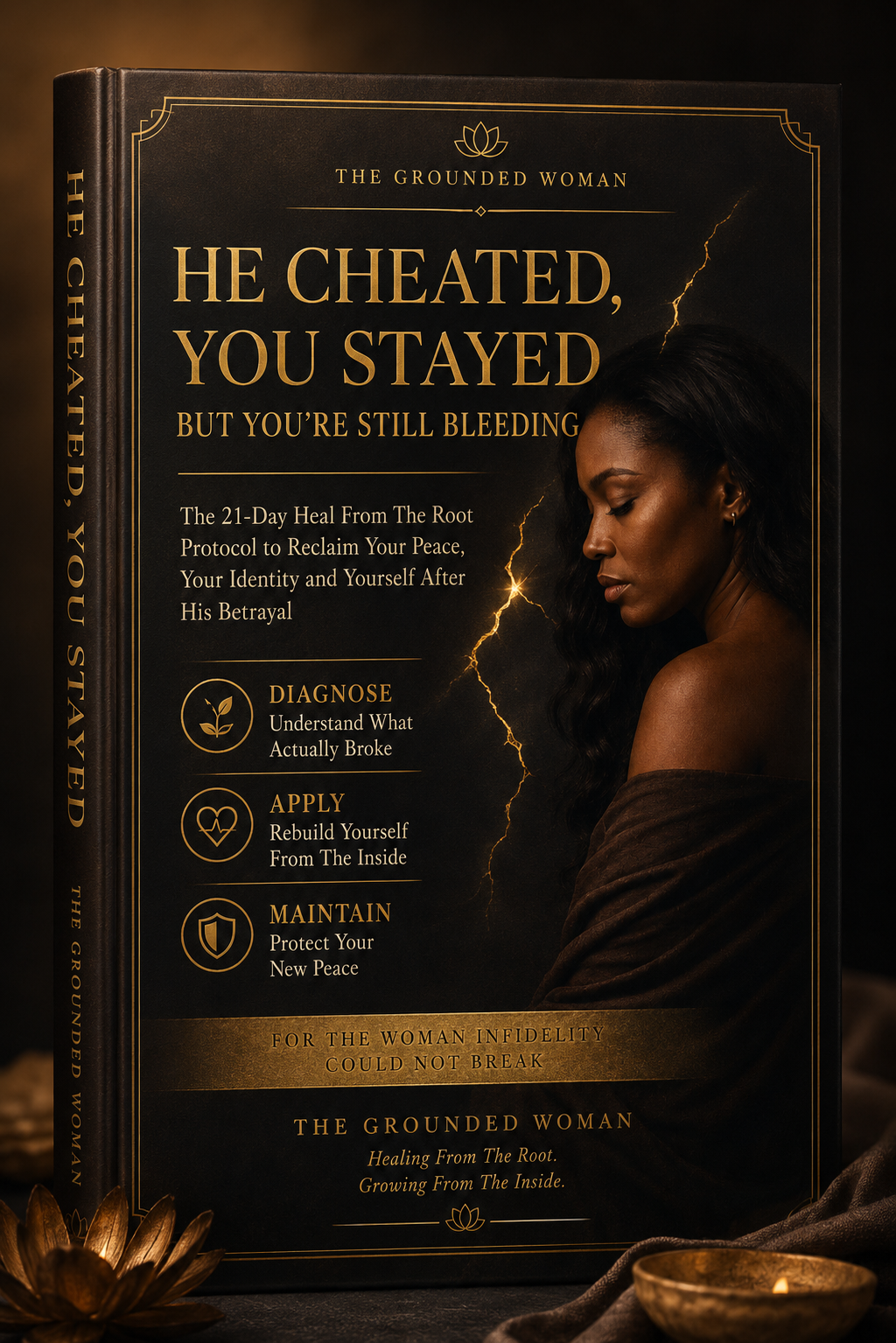
Inside this e‑guide, you'll discover:
- Why you are still hurting and nothing is wrong with you — the clinical truth about what betrayal trauma does to your brain and body, and why time alone will never be enough to heal it — Pg. 4
- The Letter You Never Sent — the single most powerful exercise in the entire protocol that releases everything you have swallowed since the day you found out, in a private written release that produces a real emotional shift within the first sitting — Pg. 11
- What forgiveness actually means — and what nobody has the right to ask you to do — the most honest reframe of forgiveness you will ever read, including what you have been silently guilted into believing that you were never actually required to do — Pg. 23
- The Trigger Response Script — a word-for-word practical protocol for exactly what to do the moment a trigger ambushes you, so you can stop the spiral before it swallows your entire day — Pg. 31
- Who you are becoming — meeting the woman on the other side of this pain — the guided identity reclamation exercise that helps you rediscover who you are outside of wife, mother, and betrayed woman, and introduces you to the grounded, whole version of yourself that already exists inside you — Pg. 41
- The daily structured healing exercises for all 21 days — each day builds on the last, each exercise is designed to produce a specific shift in your nervous system, and each prompt is written in language that speaks to you as an African woman of faith — not at you — throughout
- How to know your nervous system is beginning to settle — the specific physical and emotional signs that tell you the protocol is working, so you never have to wonder if something is actually changing inside you — Pg. 48
And the best part? You do not need to tell anyone you are doing this. You do not need to confront your husband before you are ready. You do not need to pretend you have already forgiven when you have not. It is the same structured process grounded in psychiatric research and faith that has now reached over 280+ women I have quietly shared it with.
Real Words. Real Women. Real Pain.
The experiences shared above include one buyer review, real messages received from women in our community, and findings adapted from peer-reviewed clinical research on betrayal trauma. Names adjusted where requested for privacy.
Just So You Know… Putting This Guide in an Easy‑To‑Read Format Cost Me Over ₦180,000.
That is not a number I invented to impress you. It is what it actually cost to turn years of clinical knowledge, months of research, and a deeply painful personal experience into a structured 21-day protocol that any woman can pick up and use immediately.
Here is where that money went:
→ Research compilation and clinical source licensing — verifying every claim against peer-reviewed betrayal trauma literature
→ Professional medical content editor — ensuring every exercise is clinically sound and safe for private use
→ Content development and daily exercise design — 21 days of structured prompts, reflections, scripts, and reframes written from scratch
→ Layout design and formatting — making the guide clean, beautiful, and easy to follow on any device
→ Website hosting, payment integration, and delivery system — so you receive your copy instantly the moment you pay
₦180,000. For a resource I genuinely believe should be in the hands of every woman who has ever searched for help after her husband's betrayal and found nothing but empty advice.
I am not going to charge you ₦180,000.
I will not even charge you ₦90,000.
Not even ₦45,000.
In fact, you will not even pay the fair retail price of ₦9,800.
Because I did not build this to become rich. I built this because I lost someone to a wound that could have been healed — and I will not lose another.
Your investment today is just:
₦9,800
₦5,985
One-time payment. Instant delivery. Lifetime access.
⚠️ This Discounted Offer is ONLY For the First 300 Women — 280 Have Already Taken Their Slot.
WAIT! I Have a FREE Gift For You…
If you are among the first 300 women to get the protocol today… you will receive these powerful BONUSES alongside your package. (TODAY ONLY)
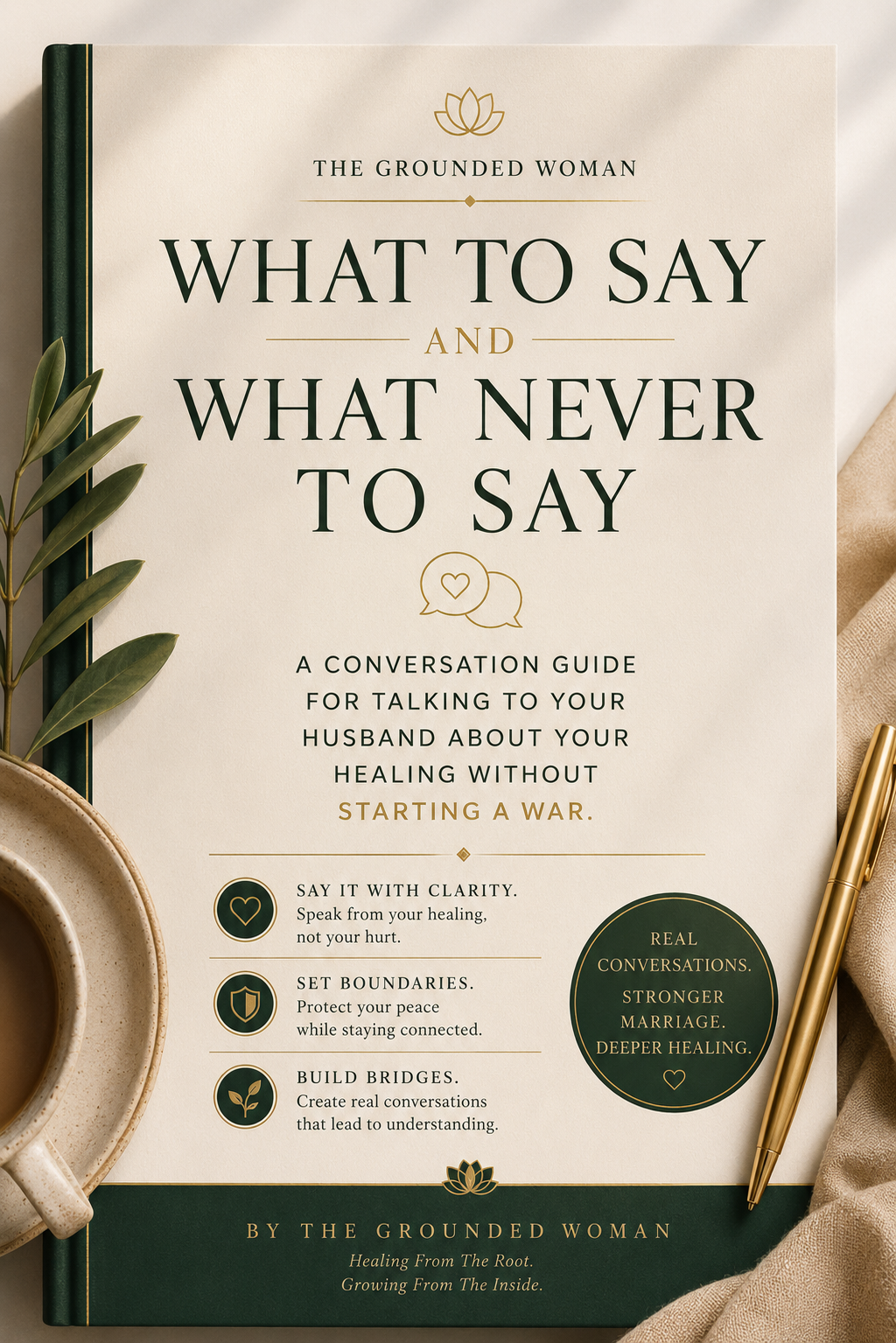
🎁 FREE BONUS #1
"What To Say and What Never To Say — The Conversation Guide for Talking To Your Husband About Your Healing Without Starting A War"
The exact words to use when you finally need to speak your truth to him — so you are heard, respected, and taken seriously without the conversation collapsing into another argument that sets you both back. Word-for-word scripts. What to say first. What never to say no matter how tempted you are. How to end the conversation with your dignity intact.
Value: ₦5,000 — Yours FREE today
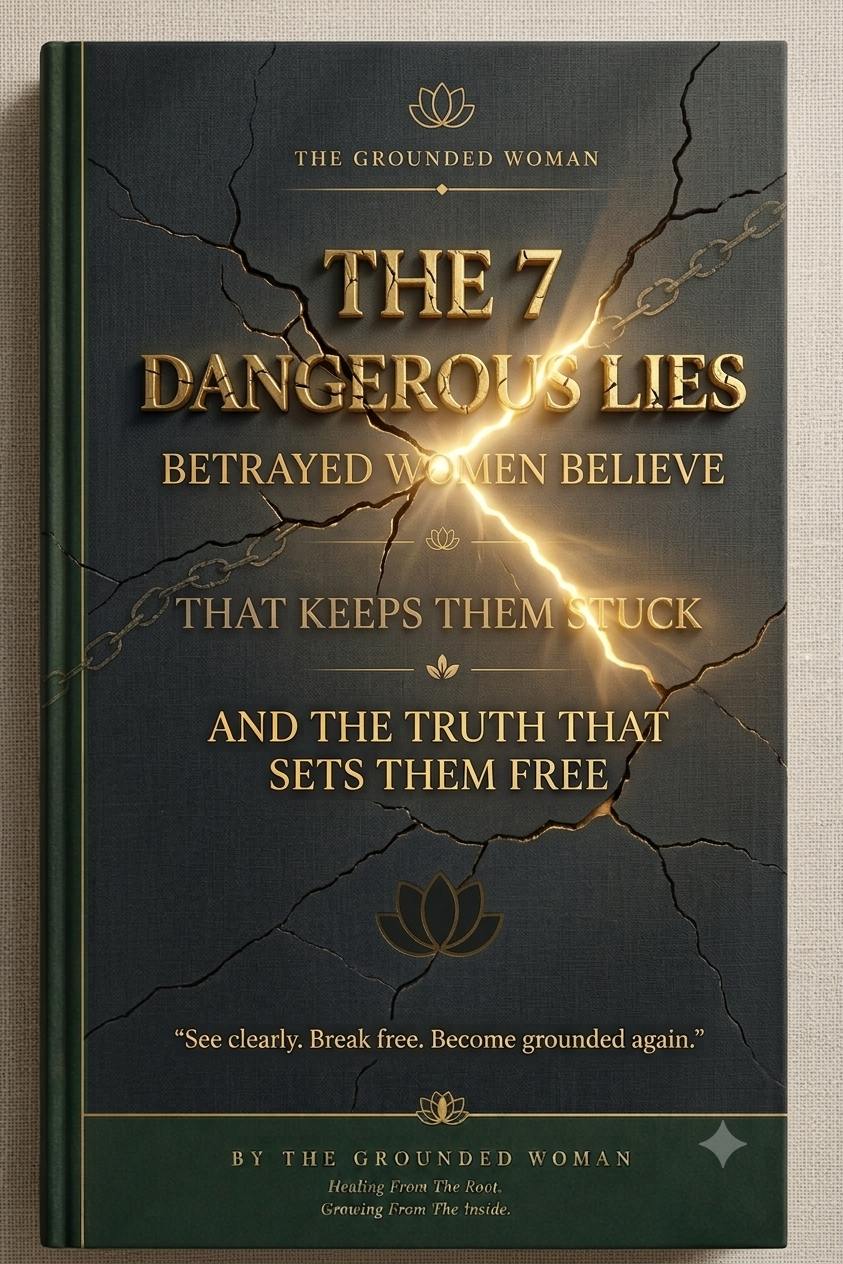
🎁 FREE BONUS #2
"The 7 Dangerous Lies Betrayed Women Believe That Keep Them Stuck — And The Truth That Sets Them Free"
A straight-talking guide that dismantles the seven most common false beliefs betrayed women carry in silence — about their worth, their fault, their future, and their faith — and replaces each one with the truth that actually heals. If you have ever thought "maybe it was my fault" or "maybe I am not enough" — this bonus was written specifically for that thought.
Value: ₦4,500 — Yours FREE today

Total Value: ₦19,300
You Pay Today: ₦5,985 — and you get everything.
280 women have taken advantage of this discount already… and I cannot promise the price will remain the same.
Bear in mind — you are not the only one viewing this page right now.
🛡️ My Bold, Risk‑Free Promise To You
Still doubting? I totally understand. Which is why I am making you this promise — and I mean every word of it:
This protocol was not created just to make a sale. It was created because too many women are carrying a pain that nobody around them can see — and deserving so much more than generic advice that was never built for their specific situation.
If you go through the 21 days honestly and you do not feel any shift in your peace, your clarity, or your sense of self — simply send us an email within 30 days and we will refund every kobo.
No questions. No hoops. No hard feelings. No forms to fill. No justification required.
But here is what I genuinely believe — and what the women who have walked this road before you have said:
The shift begins before you even finish Day 1.
More Real Words From Real Women
The experiences shared above are from real messages received from women in our community. Names adjusted for privacy. These are not fabricated testimonials — they are honest responses from women at various stages of their healing journey.
Right Now, You Have Two Choices.
Maybe God brought you to this page today for a reason. Maybe this is the answer to the prayer you prayed last night at 2am when nobody else was awake.
Who knows?
The clock is ticking. Only 20 spots remain at this price.
© 2025 The Grounded Woman Blog by Dr. Naomi Joseph. All rights reserved.
This is a digital product. You will receive instant access via email after payment.
For support, contact us via email. Results described are based on clinical research and individual experiences may vary.
Have You Started the Protocol? Share Your Experience Here